
One of the main reasons I like to write is it helps me process the emotions I feel and the challenging situations I stumble through day to day. By being open about what I experience and how I think, I hope something I say resonates with others going through similar circumstances.
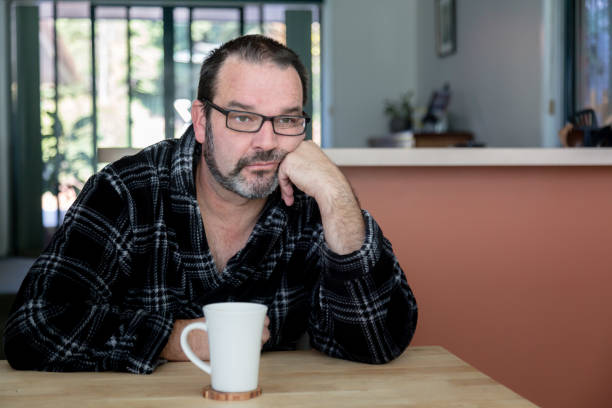
That said, I’ve been vacillating between various levels of depression for the last several years more frequently than I used to. As regular readers well know, I’ve struggled with depression and panic my entire life, but most of that battle was typically limited to isolated incidents. But as the years tick by, it seems a more low-level, baseline kind of depression has been sticking with me.
Call it my midlife crisis. I turn 43 in November, so I’m the ripe age. But truth be told, this might actually mark something like my tenth “midlife crisis” since my early 30s, when I’ve experienced some sort of existential despair.
What do I mean by that? I can remember a time in my teens and early 20s when – even while coping with bouts of depression and uncertainty regarding what to do with my life – there was a strong sense of joy from engaging with people and the world as a whole: I loved music, be it listening to it, playing it on guitar, or writing it; I had an active and engaged group of friends whom I regularly had dinner with, watched movies with, hung out at homes with; and I liked going places, be it day trips to the beach or other random places or just driving aimlessly around.
I guess in hindsight things started slowly changing in my late 20s. I became a single dad, which of course was a massive life adjustment that – while the best thing that’s happened to me – limited my availability. Almost all my close friends married and had children of their own while I remained single. I had three separate falling outs with leaders in two churches I belonged to, which effectively eliminated those communities I have known my entire life.
Romantically, I’ve had four major heartbreaks over the span of two decades, and my last relationship a little over three years ago seems to have taken much of my desire with it.
The COVID quarantine era was really hard because my daughter was with her mom for over three months while I worked from home, so I was isolated from physical interactions with other people.
Those experiences plus whatever normal aging changes occur to people emotionally have resulted in this: I’ve found my introverted tendencies increasing to the point I rarely want to do anything that involves groups of people. I barely listen to music anymore. I rarely spend time with friends. I tried to start a church for those who had similar unfortunate experiences as I had, but I botched that up pretty good, so I still don’t have a community I feel connected to.
My life consists of me going to work, spending time with my daughter, doing the basics I need to keep up my home, taking one or two vacations a year (thank God I still love to travel), slowly finishing my graduate degree in seminary, writing things like this from time to time, dabbling at still trying to form a Christian community, and either sleeping or playing video games to disassociate myself from the depression that would otherwise probably be more acute.
That’s pretty much it.
And I think that’s the same premise for all of us who are going through something we’d label as a “midlife crisis”: we wake up one day, take stock of where our lives are, and ask ourselves, “Is this it? Is this really all there is to life? This kind of sucks.”
So like many who experience these kinds of crises, I find myself daydreaming about making some sort of big change. Owing probably to my love of travel and visiting new places, I frequently think about relocating – how great would it be to move somewhere cooler and have a fresh start?
But then the reality of my life confronts me and threatens to make me resentful because I feel trapped by my obligations: my daughter is finishing high school, so of course I can’t uproot her; my parents are aging, so it’d be a real jerk move to up and leave in the twilight of their life.
And when I’m honest with myself, I know relocating won’t be some magic bullet that makes life better – the root of our deepest problems are within ourselves, so wherever we physically find ourselves in life, we’re dragging those problems around with us. Changing location (or anything else we’re tempted to change) won’t suddenly alter who I am and who I’ve allowed myself to become.
I’m reminded of a book I read in my early 30s that I need to revisit: Acedia & Me: A Marriage, Monks, and a Writer’s Life by Kathleen Norris. I was unfamiliar with what acedia was, but it encapsulates the heart of what midlife crises (and existential crises in general) are.
Acedia is a bit nebulous to define – it’s commonly associated with slothfulness, but it’s more than that. One way Norris describes it is hatred of the place – hatred of where you find yourself in life, a general dissatisfaction that makes it hard to stay in one place for very long.
It can lead us to reject our present moment in life and instead distract ourselves from reality, often through vices.
As Jean-Charles Nault describes it in The Noonday Devil: Acedia, the Unnamed Evil of Our Times, it’s often experienced as “loneliness, feelings of being excluded or thinking that life is sterile and unproductive…a lack of joy and hope, a feeling of discouragement.”
As suggested by Nault’s book title, many (all?) of us in contemporary Western societies struggle with acedia. Call it a First-World Problem if you will, a product of living within an overly-affluent society where we have the luxury of having the mental space to even think about such things because our time isn’t being consumed (as it has been with the vast majority of people across thousands of years of history) with just trying to survive.
We are plagued by acedia in America and have labeled it as a “midlife crisis,” when in reality we experience it almost constantly. From the tendency to hop from job to job that is now the norm for most people (guilty as charged), to the short life span for most marriages, to the fact that many of us find ourselves physically relocating across the country several times during our life, we are a people constantly dissatisfied with our lives and seeking change.
So what do we do? Is there a cure for this constant dissatisfaction? There is, but it goes against the grain for those of us experiencing it – perseverance.
One of the Desert Fathers, a group of Christian monastic mystics from over a thousand years ago, Evagrius, wrote this: “Perseverance is the cure for acedia, along with the execution of all tasks with great attention. Set a measure for yourself in every work and do not let up until you have completed it.”
It’s discipline, something I’ve struggled with my whole life. Actually doing the things you know in your heart you ought to be doing: exercising, eating better, keeping steady at chores to gain a sense of control and accomplishment, regularly reading scripture and praying, committing to being with a group of people to hold one another accountable in life.
I don’t know why, but this has always been incredibly hard for me. But we can ask for help – both in prayer, asking God to give us motivation and strength, and in community, asking a close friend or group of friends to help hold us accountable.
We don’t have to just suck up our own inner fortitude and rely on self alone – in fact, I’d argue that’s one of the reasons acedia is thriving in the West, because we’re overly focused on and worship all aspects of individualism at the expense of community.
So stick it out, whatever “it” is in your life – persevere (the exception of course being with matters of abuse). See whatever things you’re working on in life to the end. Join a community, seek help and accountability.
Stop viewing your life as “my life,” and start viewing it as one of many lives within a group of folks, be it a church or other community; as a life that belongs to God, not you. As Jesus famously said, true life is found in laying it down for others – he who seeks to save his own life will lose it, but whoever loses their life for Christ’s sake will find it.
These truths are easy to forget as we go day by day through accumulative years of life. May this serve as your reminder.

 David S. Wisener