
There are many reasons why American Christians have been reacting the way they have when it comes to their political and social behavior and responses, but I think one reason stands out from the rest: Christians (more broadly, conservative Americans in general) feel like their way of life is under attack.
I’d say that, based on their perception, they’re correct. I would also say, however, that their perception isn’t accurate.
I’ll explain.
It shouldn’t surprise anyone that cultures change over time. It’s pretty obvious, for example, that life right now is different than it was 20 years ago, and 20 years ago was different from 40 years ago, and 40 years ago was different from 100 years ago.
A lot of that change is driven by advances of technology – the invention of automobiles, for example, drastically changed how people live.
Besides technology, though, there are shifts in ways of thinking about aspects of society that also occur: the Civil Rights Era and the Women’s Suffrage movement are examples of that.
But sometimes, there are shifts that are even larger than that, where entire paradigms of how people live life begin to change.
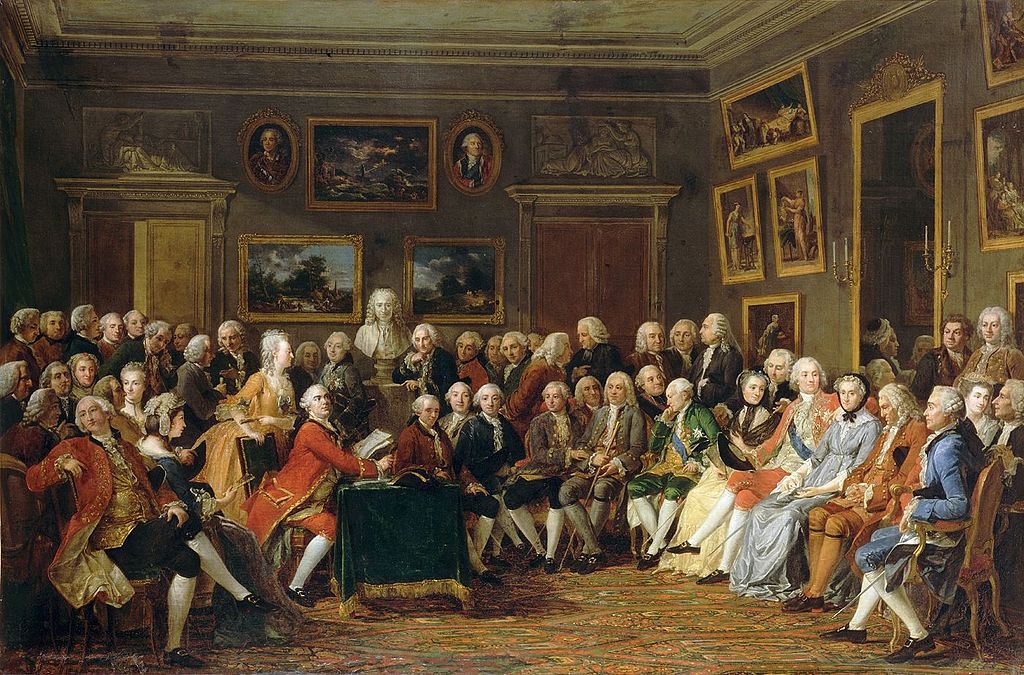
I think we in America, Europe, and the rest of Western society are living in the middle of one of those paradigm shifts, likely the largest cultural revolution since the Protestant Reformation took place over 500 years ago.
The Reformation represented, in hindsight, a massive shift in authority away from institutions (specifically, the Church) and toward individual people.
Whereas the Church previously held all authority on interpretation of scripture and matters of the Christian faith, the Reformation saw people take advantage of more-readily accessible Bibles (thanks to the printing press) and begin standing against the Church and claiming authority for understanding scripture themselves.
This individualism has continued to evolve through the Reformation and the Enlightenment into our current era. Over this multi-hundred-year timeframe, the sovereignty of the individual has continued to gain more power: you can see it in different forms, extending (for example) from religion into politics with both the French and American Revolutions that championed the rights of individuals against the perceived injustices of monarchies.
It makes sense that this individualist trajectory would continue to evolve, and now we have landed at what I am calling another cultural revolution because the next logical step in this progression is being taken.
This step moves beyond the Reformation and Enlightenment’s shifts of authority in religion and politics, respectively, to individuals, to now shifting authority of defining what it means to be human to individuals.
Think about it. The logic that motivated people to not listen to institutions or tradition about religion or politics would of course eventually motivate people to only listen to themselves about who they are – sexually, relationally, regarding gender, or any other self-descriptor.
What complicates matters is, not everyone who lives in Western societies accepts these cultural shifts.
There are, for example, many people who still trust in the institution of the Church for religious authority (Roman Catholics and Orthodox are the most obvious examples); there are several who reject the idea of democracy and republics and prefer more authoritarian forms of government (which is becoming more abundantly clear lately); and there are many people who think individuals have no place in defining what it means to be human.
It is the tension caused as a result of these competing perspectives that is one of the key factors at the heart of why there is such drastic polarization between “liberals” and “conservatives” in America.
The root issue is a fundamental disagreement on understanding where authority ought to belong – is it with individuals, or is it with groups?
The question of whether God is real is crucial here. If there is a God that created humanity, then that God probably did so with a purpose in mind. If that’s true, then pure individualism can’t be totally correct, because you and I don’t have ultimate authority; God does, and it’s up to us to do our best to figure out and follow God’s purposes.
There are a lot of nuances I’m glossing over, of course. But generally speaking, there are two competing stories at play in America: one that carries out the next logical step in the evolution of individualism and one that adheres to a more traditional understanding of humanity.
Those who want a robust expression of individualism (in general) want to increase sensitivity and recognition of people who belong to sexual and gender-identification minorities and normalize their acceptance and inclusion within society. They seek to overcome many years of prejudice and discrimination by changing the narrative about who decides what it means to be human, often by doing so aggressively.
Many (not all) American Christians, on the other hand, hold to traditional ways of understanding humanity and view their way of life as under attack – they see advocacy for full acceptance of all kinds of ways of self-identifying as assaulting God’s purposes, and they also often view America itself as a Christian nation. They see the loud, social media-induced “cancelations” of people who don’t toe specific, politically correct lines as an oppressive form of a mob mentality.
The problem with this particular traditional Christian perspective is that aspects of it are slightly off-base, and it is one of three examples of how the evangelical Christian subculture is currently broken.
First, as I’ve discussed here and here at decent length in the past (I won’t rehash because it’d take too long – please refer to those posts if you’re curious), it’s incorrect to identify the U.S. (or any country) as a “Christian nation.”
There was a heavy Christian influence early in American history, but the stronger influence on the Constitution and the Declaration of Independence came from secular philosophies of the Enlightenment (especially the work of John Locke, Jean-Jacques Rousseau, and Thomas Hobbes) and a deistic (not Christian) view of God – deism believes in a generic god as a creator of the universe who no longer intervenes or interacts with people.
Second, for any Christian to insist that non-Christians either must live according to Christian morals or a Christian worldview is to completely lose Jesus’ plot.
As I wrote in the first post in this series, Jesus’ Kingdom of God is about power working under people (motivating others to choose to belong to the Kingdom through service, self-sacrifice, and love) while the kingdoms of the world are about power working over people (forcing them into submission through intimidation, fear, and violence).
Forcing anyone to do or believe in something is the opposite of what the Kingdom of God is about. Trying to enforce our beliefs or morality on people who are not Christian and don’t share our same concerns only has the effect of pushing people further away from Christ and – at best – leaving a bad taste in their mouths regarding their association with Christians.
The further problem behind American Christians aggressively imposing their political agendas on non-Christians is the justification many Christians use about ensuring they’re protecting their personal rights (typically their religious freedom).
That’s a problem because, as a Christian, I no longer have any rights – “I have been crucified with Christ, and it is no longer I who live, but it is Christ who lives in me” (Gal 2:19-20).
Dead people don’t have rights. The Kingdom of God is inherently other-centered – if we’re focusing on “me,” “mine,” “my rights,” we’ve again lost the plot.
Christianity thrives in adversity, and I mean true adversity, not the so-called “adversity” some American Christians like to claim we’ve experienced regarding our religious freedoms. So what if the worst fear happens and some sort of anti-Christian totalitarian government controls the U.S.? Tertullian once wrote “The blood of the martyrs is the seed of the church,” and it’s precisely because the church has historically always blossomed under legitimate persecution.
That segues into the third and last point, which is fear itself. American society in general, but more specifically American Christian’s evangelical subculture, is absolutely riddled with fear.
Fear sells – social media and most news programs focus on issues that stoke fear in people because people want to be angry at and blame other people for their problems.
It should go without saying (but obviously does not) that Christians should never seek to ostracize or scapegoat other groups of people, and we of all people should have zero fear.
“Do not be afraid” is the most repeated phrase in scripture, and with good reason – God emphasizes across scripture that, no matter appearances, God is in charge of the universe and will ultimately make all things right.
Christians are taught the vital necessity of trust – faith and hope (which assume trust) being two of the most important virtues along with love – in every aspect of life. We are assured that the final outcome of creation is set, and God wins.
If we know what the end result is and that we only need to do what we can with the life we’re given in the interim, we have absolutely nothing to fear.
A life lived in fear is a life spent in a type of bunker mentality, where we begin to care only about ourselves and those in our group, which is the opposite of living out in love the way Jesus explained and demonstrated.
We begin to defend moral compromise and believe more frequently that the ends justify the means as we seek our own selfish interests instead of being living sacrifices selflessly giving ourselves in service to others.
And this is exactly what we are seeing in America.

 David S. Wisener